The Mediterranean diet, without the rulebook
What the eating pattern actually means and how to use it with the food, budget and culture you already have.
 Mei3 min read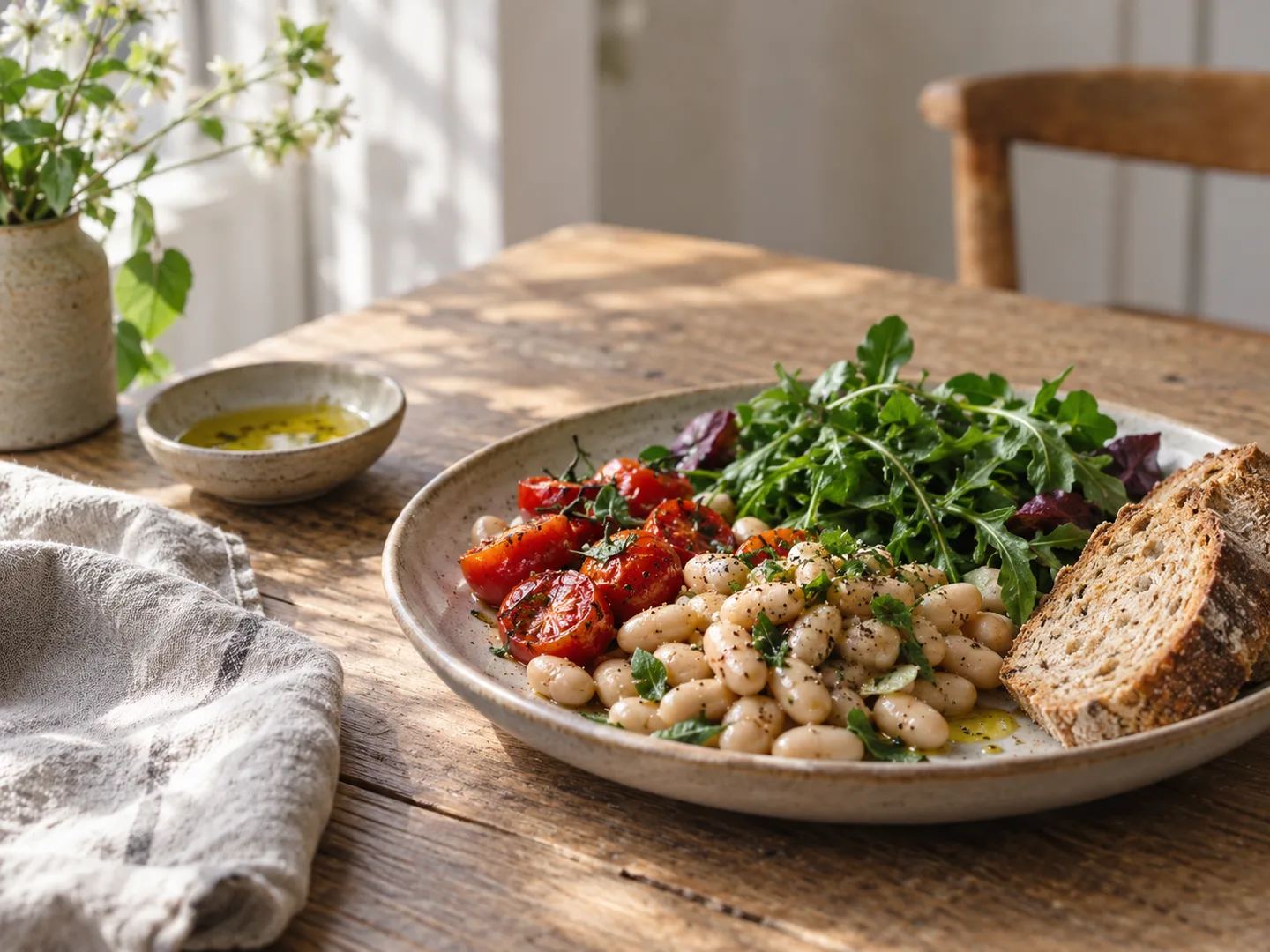
In this article
A Mediterranean diet headline can make it sound as though you need imported olives, a perfect plate and a weekly fish budget. The research is about an eating pattern, not a branded menu. It generally means more vegetables, fruit, beans, lentils, whole grains, nuts and olive oil, with fish and other protein foods included according to preference. The idea is useful even if your kitchen is nowhere near the Mediterranean Sea. You can apply the pattern using familiar foods and the ingredients you can afford.
What makes it a pattern?
No one ingredient carries the benefit. A meal of beans, vegetables and wholegrain bread fits the broad approach. So can rice with lentils, greens and a little oil, or a fish dish with potatoes and salad. The American Heart Association describes the Mediterranean pattern as rich in plant foods and unsaturated fats. That is more flexible than a seven-day shopping list. It also means a biscuit or a different holiday meal does not erase the pattern you usually follow.
The word Mediterranean covers many cuisines, and no single country eats one uniform diet. A rigid social-media menu is often more about selling a lifestyle than explaining nutrition. Focus on the repeatable features: regular plant foods, useful fats in place of some saturated fats, and meals you enjoy enough to keep making. Our guide to fibre shows how pulses and whole grains can fit into ordinary meals. If a food is unavailable or expensive where you live, swap it for a local food that serves the same role.
What the evidence supports
The AHA's comparison of popular dietary patterns placed Mediterranean-style eating among the patterns that align well with heart-health guidance. This does not mean it prevents every illness or that one meal changes your risk. Much of the value is in the overall combination of foods and habits. Research on diets also faces the usual difficulty that people eat in communities and routines, not in a laboratory forever. A healthy pattern should be practical enough to survive ordinary weeks.
WHO guidance on a healthy diet similarly emphasises variety, fruits, vegetables, whole grains and pulses. You do not have to choose a label to act on those common ideas. A Mediterranean-style pattern can be a helpful framework if it removes confusion; it becomes less helpful if it makes you anxious about a teaspoon of butter or a restaurant meal. The goal is to improve what you eat most of the time, not to win a purity contest.
Make it work in your kitchen
Start with a meal you already cook. Add a vegetable, use beans to stretch the protein, or choose a wholegrain option you genuinely like. Keep tinned beans, frozen vegetables and a simple sauce around for busy nights. These are often easier than buying a basket of fresh ingredients that spoil before you use them. Our budget protein guide offers more ways to build a useful pantry. Olive oil is one option, not a magic requirement; other unsaturated plant oils may be practical in your region.
If you dislike fish or do not eat it, do not force it. If nuts are unsafe because of allergy, skip them. If you have a condition requiring a special diet, ask a clinician or registered dietitian how to adapt the pattern. The framework should serve you. It can include family recipes and cultural staples, rather than replacing them with an imagined coastal dinner every night. Sharing meals and enjoying food are part of making a pattern last, even though they are harder to show in a nutrient chart.
One change for this week
Choose one familiar dinner and make a plant-food addition you can repeat: a tin of lentils in a stew, extra vegetables beside rice, or a handful of nuts with fruit if suitable for you. Repeat it twice before buying anything unusual. Notice whether the result tastes good, fits your time and feels satisfying. If it does, keep it; if not, try a different version. A diet that looks beautiful in a photograph but never gets cooked is less useful than a modest meal you actually make. Build a pattern from familiar plates, not from an imported rulebook.
You can also make the change with breakfast or lunch if dinner is already settled. A familiar routine is easier to adjust than an entirely new menu. Keep the ingredient that makes the meal feel like home, and let the plant-food addition support it rather than replacing it.
Sources
- What is the Mediterranean Diet?. American Heart Association.
- Popular Dietary Patterns: Alignment with AHA Dietary Guidance. American Heart Association.
- Healthy diet. World Health Organization.
Pass it on
XBlueskyEmail